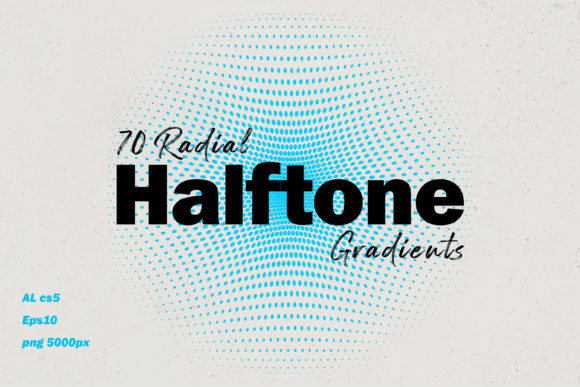
Radial Halftone Gradients: A Designer's Collection of 70 Dynamic Effects
Looking for a way to inject immediate energy, depth, and a retro-modern vibe into your projects? The Radial Halftone Gradients Collection is a curated set of 70 distinct radial halftone effects. These aren't your standard, static textures. Each design radiates from a central point, using patterns of dots—circles, stars, quad stars, and squares—to create a compelling sense of motion and dimension. Think of it as a versatile design asset that bridges the gap between vintage print aesthetics and contemporary digital art.
Understanding the Visual Power of Radial Halftones
At its core, the Radial Halftone Gradients Collection is about controlled visual rhythm. The halftone technique, traditionally used in printing to simulate shades, is here repurposed as a deliberate stylistic element. The radial arrangement transforms simple dots into dynamic gradients that can pull the viewer's eye toward a focal point or create a mesmerizing background texture. The variety of dot shapes—each with its own personality—means you can match the effect to your project's tone. Crisp circles offer a clean, technical feel, while stars and quad stars add a touch of playful energy or cosmic flair. Squares provide a more geometric, structured aesthetic.
This collection shines because it offers both raster and vector formats. The high-resolution PNG files (5000px x 5000px) are perfect for photo compositing in Photoshop or as overlays in video editing. The vector AI and EPS files are the real workhorses, allowing for infinite scalability and easy color manipulation. This dual-format approach makes it a practical commercial font alternative for designers who need assets that are both beautiful and highly editable.
Where These Effects Truly Come Alive
The applications for the Radial Halftone Gradients Collection are remarkably broad, fitting seamlessly into both digital and print workflows. Its strength lies in adding texture and visual interest without overwhelming a design.
- Branding and Logo Design: Use a subtle radial gradient as the background for a logo presentation to give it depth. A star-shaped halftone could become a memorable element in a logo for an entertainment or tech brand, influencing brand perception by conveying innovation and dynamism.
- Editorial and Packaging Design: These effects are superb for editorial design—think magazine covers, chapter openers, or feature article backgrounds. In packaging design, a radial gradient can create a striking shelf presence, drawing attention to product names or key features.
- Digital and Social Media: For web design, use them as hero section backgrounds, button textures, or subtle UI elements. They are exceptional for creating eye-catching social media graphics, from Instagram story backgrounds to Facebook ad visuals that need to stop the scroll.
- Apparel and Merchandise: The vector files are ideal for clothing design. A bold, radial halftone can make a T-shirt graphic or a tote bag print pop. The collection's scalability ensures designs look sharp on everything from small patches to large posters.
Practical Guidance for Using This Collection
Integrating these assets effectively requires a thoughtful approach. Here’s how to get the most out of them.
Evaluating Project Fit and Font Pairings
Before diving in, consider the personality of your project. The halftone style inherently carries a retro or graphic novel feel. It works beautifully with modern typography—pair it with a clean sans serif font for a contemporary contrast, or with a bold display font for maximum impact. For a more classic look, a sturdy serif font can ground the energetic halftone. Avoid pairing it with overly ornate script fonts or handwritten fonts, as the competing details can create visual clutter and harm readability.
Working with the Files
The included files are straightforward. The vector formats (AI CS5+ and EPS10+) allow you to ungroup the elements, change the fill colors of individual dots or the entire gradient, and scale to any size. This is crucial for maintaining visual hierarchy—you can recolor a gradient to align with your brand identity palette. The PNG files are best used as textures or overlays. Experiment with blending modes in Photoshop (like Multiply or Screen) to integrate them seamlessly into your compositions.
Testing and Refinement
Always test your designs at the intended viewing size. A dense halftone pattern might look great on a poster but could become noisy or distracting in a small web banner. Use the effects to support your message, not compete with it. Layering a radial gradient under text? Ensure there's enough contrast for the text to remain the clear focal point. The goal is to enhance audience engagement, not create a barrier to comprehension.
Ultimately, the Radial Halftone Gradients Collection is more than just a set of textures; it's a toolkit for adding sophisticated, dynamic energy. By understanding its visual language and applying it with intention, you can elevate designs across the spectrum—from professional brand identity projects to personal creative explorations. Its blend of vintage technique and modern versatility makes it a valuable addition to any designer's library of premium font alternatives and creative font assets.